
Updated Employee Verification Letter and Families First Act
Following are several updates and resources for your use, as you work through implementation of COVID-19 requirements.
READ MORE
Following are several updates and resources for your use, as you work through implementation of COVID-19 requirements.
READ MORE
In just released guidance from the Department of Homeland Security, the President has designated Food and Agriculture as Critical Infrastructure in the fight against the spread of Covid-19. This guidance is provided to state and local officials when developing responses to the spread of the disease.
READ MORE
A number of counties in the rice growing region have issued shelter in place orders or directives, in an effort to slow the spread of the COVID-19. When these requirements are adopted, Essential Businesses are designated and allowed to continue operations while restrictions are in place. While each order or directive is county specific, farming, food and ag processing and companies supplying these businesses have been designated as Essential Businesses.
READ MORE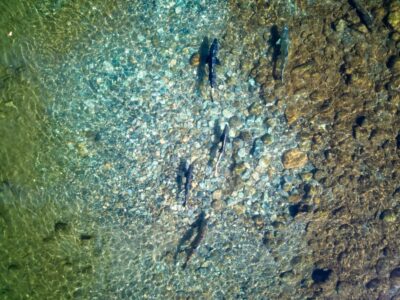
After nearly two years in production, we are excited to announce that today marks the debut of “Sharing Butte Creek,” a short film on this major environmental success story. Emmy Award winning producer, photographer and editor Kit Tyler interviewed rice growers, water officials, conservationists and others as part of this project.
READ MORE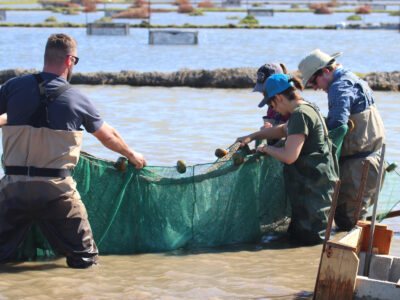
Our latest episode of Ingrained, the California Rice Podcast, covers an important and exciting new endeavor spearheaded by the Rice Commission- our Pilot Salmon Project.
READ MORE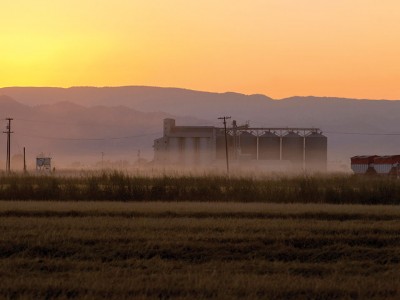
A reminder that March 16 is the deadline to enroll in the Agriculture Risk (ARC) and Price Loss Coverage (PLC) programs for the 2019 crop year.
READ MORE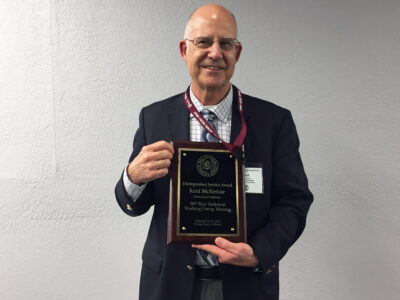
For his long and productive period working to improve California rice varieties, Rice Experiment Station Director Kent McKenzie has received a major honor. At the 38th Rice Technical Working Group meeting in Alabama, Dr. McKenzie received the distinguished service award today.
READ MORE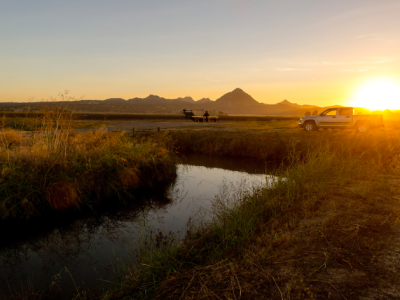
Analysis of the Rice WDR compared to other Ag Waste Discharge Requirements shows significant benefit to Sacramento Valley rice growers. At a cost of $1.60 per acre (plus staff), paid for by the CRC out of member dues, the program is the most competitive in the state. Other WDRs range from $4-$7 per acre and must be paid for directly by the grower.
READ MORE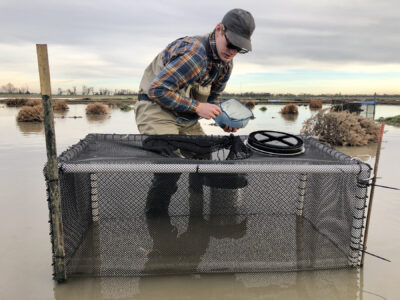
We are pleased to report that we now have 9,000 baby salmon placed into winter-flooded rice fields as part of the second year of the California Rice Salmon Pilot Project. These fish are in eight specially-prepared test plots in a living scientific experiment designed to determine if any unique extra treatments, such as deep channels or vegetative cover, make these fish food-rich rice fields even better habitat for these young salmon. Later this season, they will swim off for their journey towards the Golden Gate, and about 1,000 will be tracked with sophisticated, surgically-implanted tracking devices in a truly cutting-edge scientific study.
READ MORE
In 2020, the Central Valley Regional Water Quality Control Board will begin implementing strict new requirements for the discharge of nitrate and salt from agriculture. After more than a decade in development, the CV-Salts Basin Plan Amendment will make two important changes to all Waste Discharge Requirements (WDR’s) under which all surface and groundwater discharges fall. Here is a link to a comprehensive summary of the changes and helpful maps.
READ MORE